

Tausende Kirchenglocken wurden in den beiden Weltkriegen eingeschmolzen, um an Metall zur Herstellung von Geschosshülsen zu kommen. Im Ersten Weltkrieg lagerten 67.500 Glocken auf Glockenfriedhöfen, darunter auch die Eisentaler Kirchenglocken.
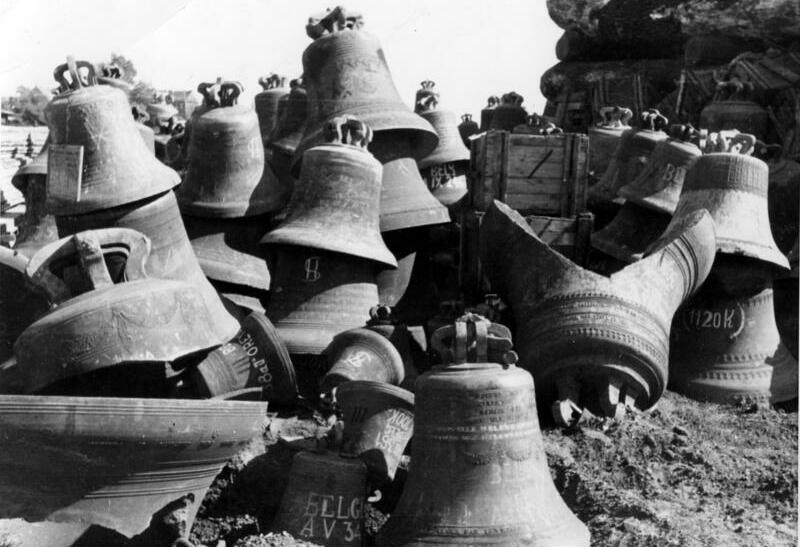
1947. Das Glockenlager im Hamburger Freihafen
Diese Glocken wurden von den Nazis während des II. Weltkrieges beschlagnahmt um sie einzuschmelzen. Man versucht sie jetzt zu identifizieren und den Kirchen ihr Eigentum zurückzugeben.
Foto: Glockenfriedhof in Hamburg Quelle: Bundesarchiv Koblenz
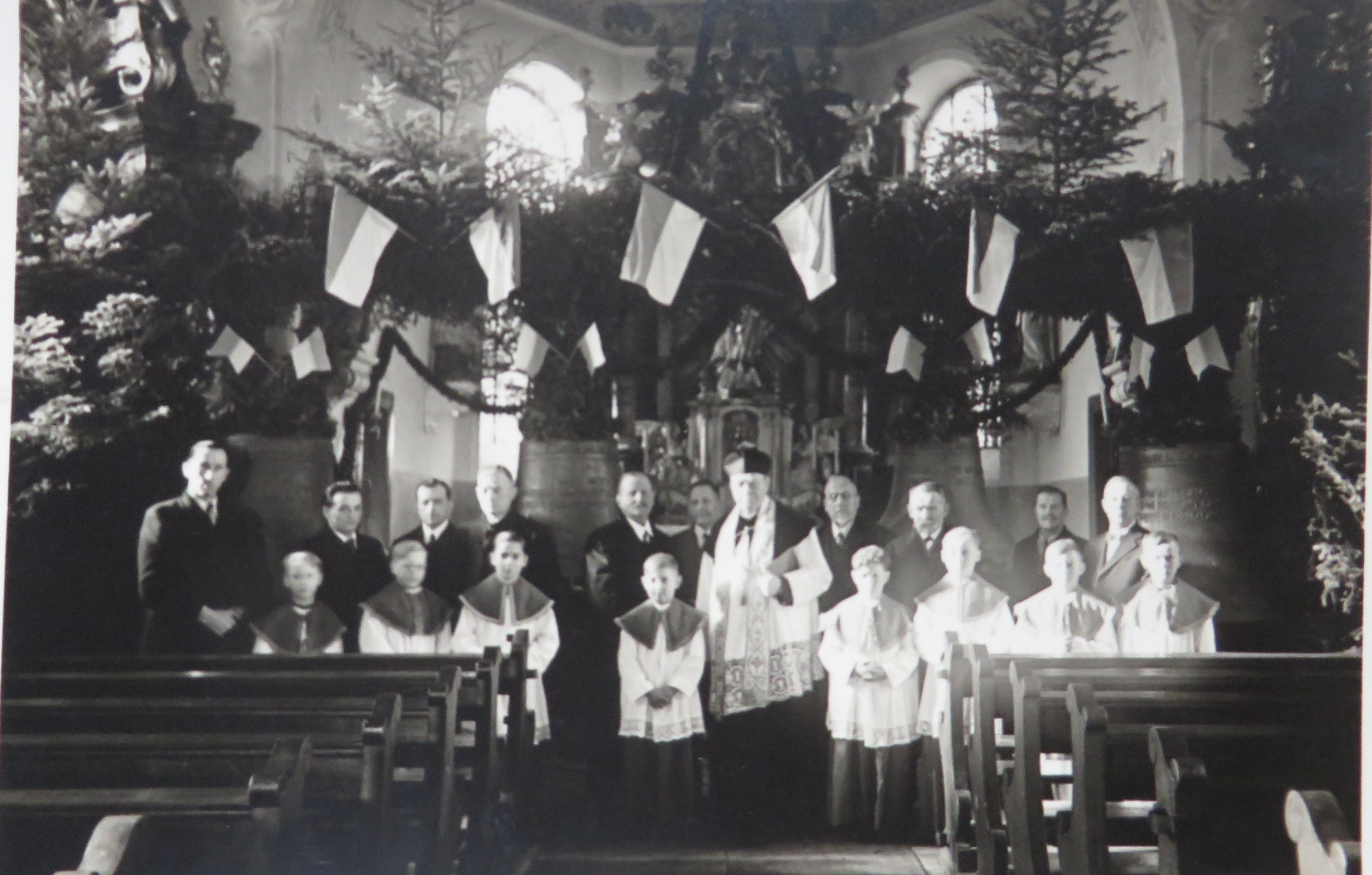
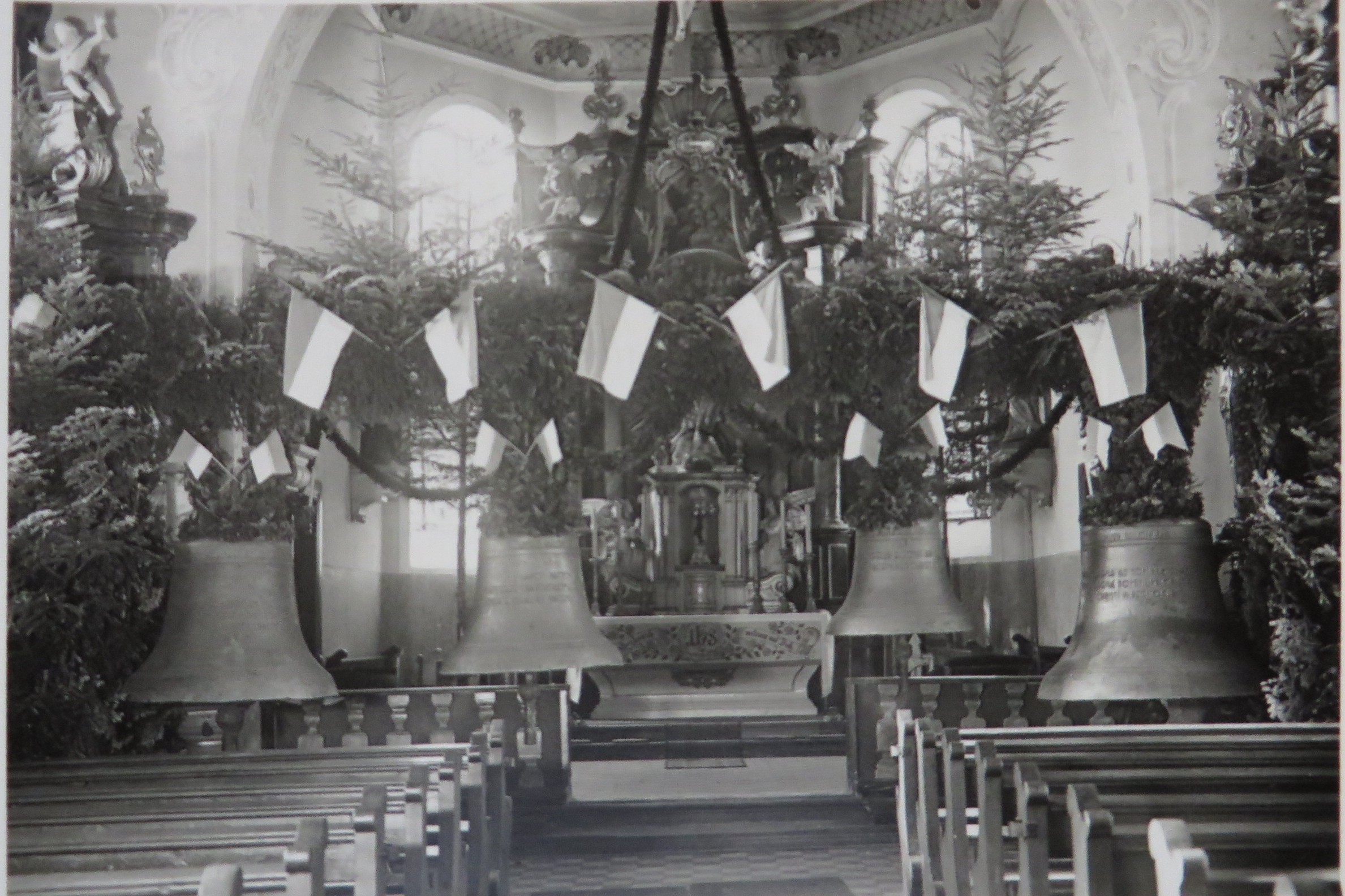
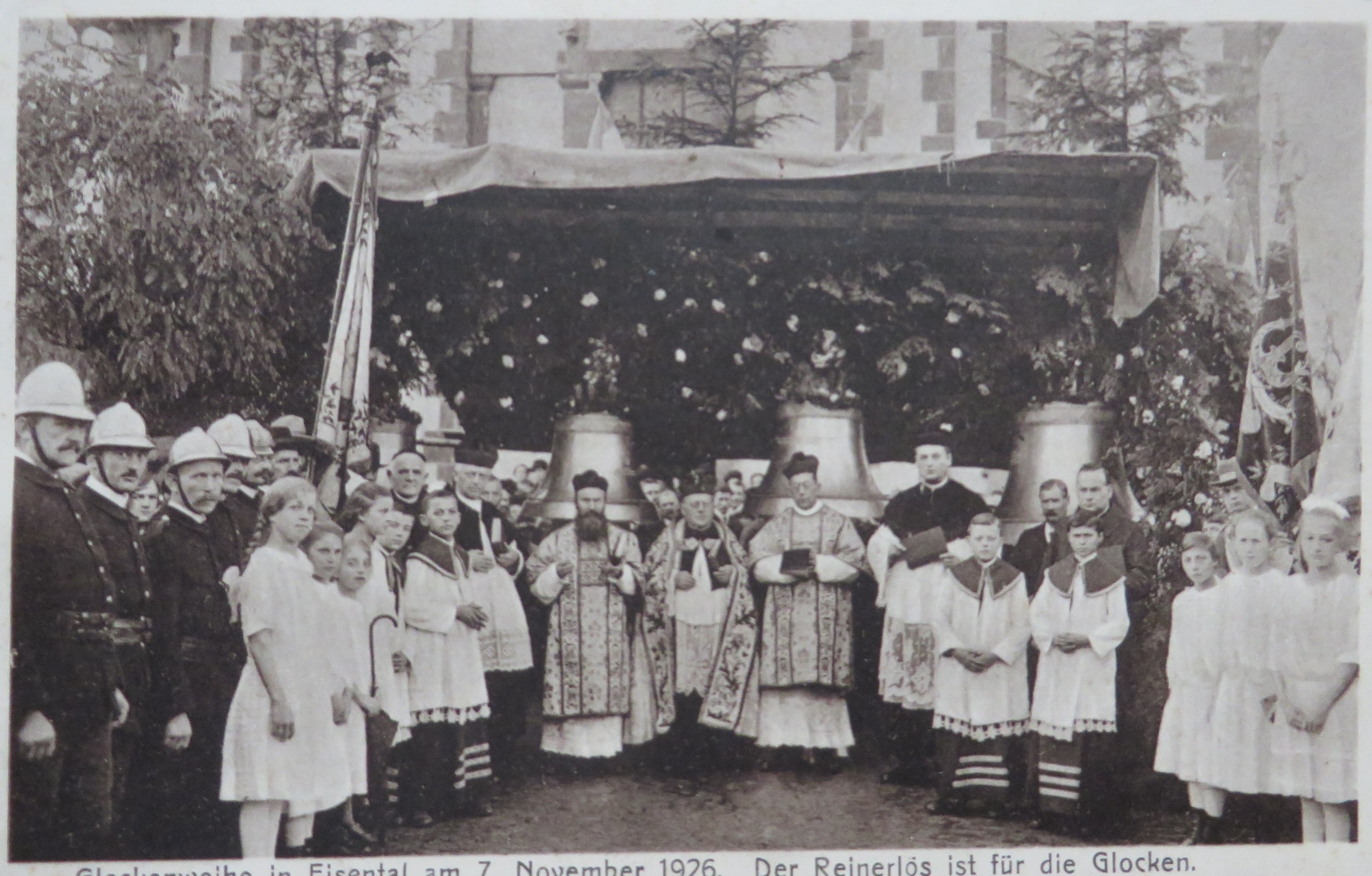
Glockenweihe 1926 in der St. Matthäus Kirche. Fotos: Stadtgeschichtliches Institut Bühl
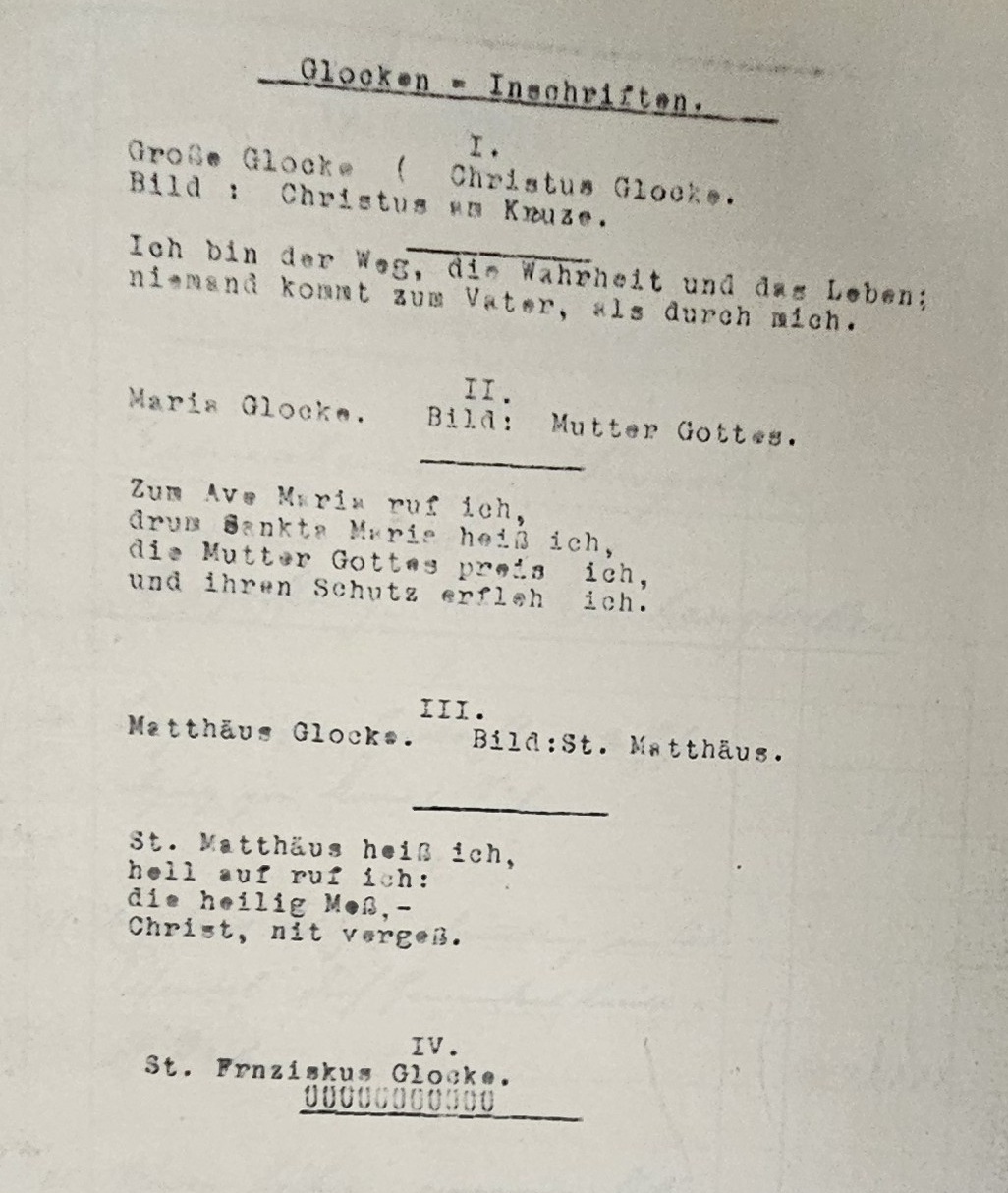
1926 gab es dann vier neue Glocken für die St. Matthäuskirche. „Das neue Geläute weist die vertraglich festgesetzte harmonisch melodische Disposition f – as – b – c auf. Ich finde den Klang rein, frisch, kräftig und rund, voll angenehm und weich“, so Glockeninspektor Steinhart in seinem Gutachten.
14 Jahre später wurden auch diese Glocken eingeschmolzen. 1948 finanzierten die Eisentäler wieder neue, die von der Briloner Glockengießerei am Gasthaus Rebstock ankamen und in einem Umzug durchs Dorf gefahren wurden.
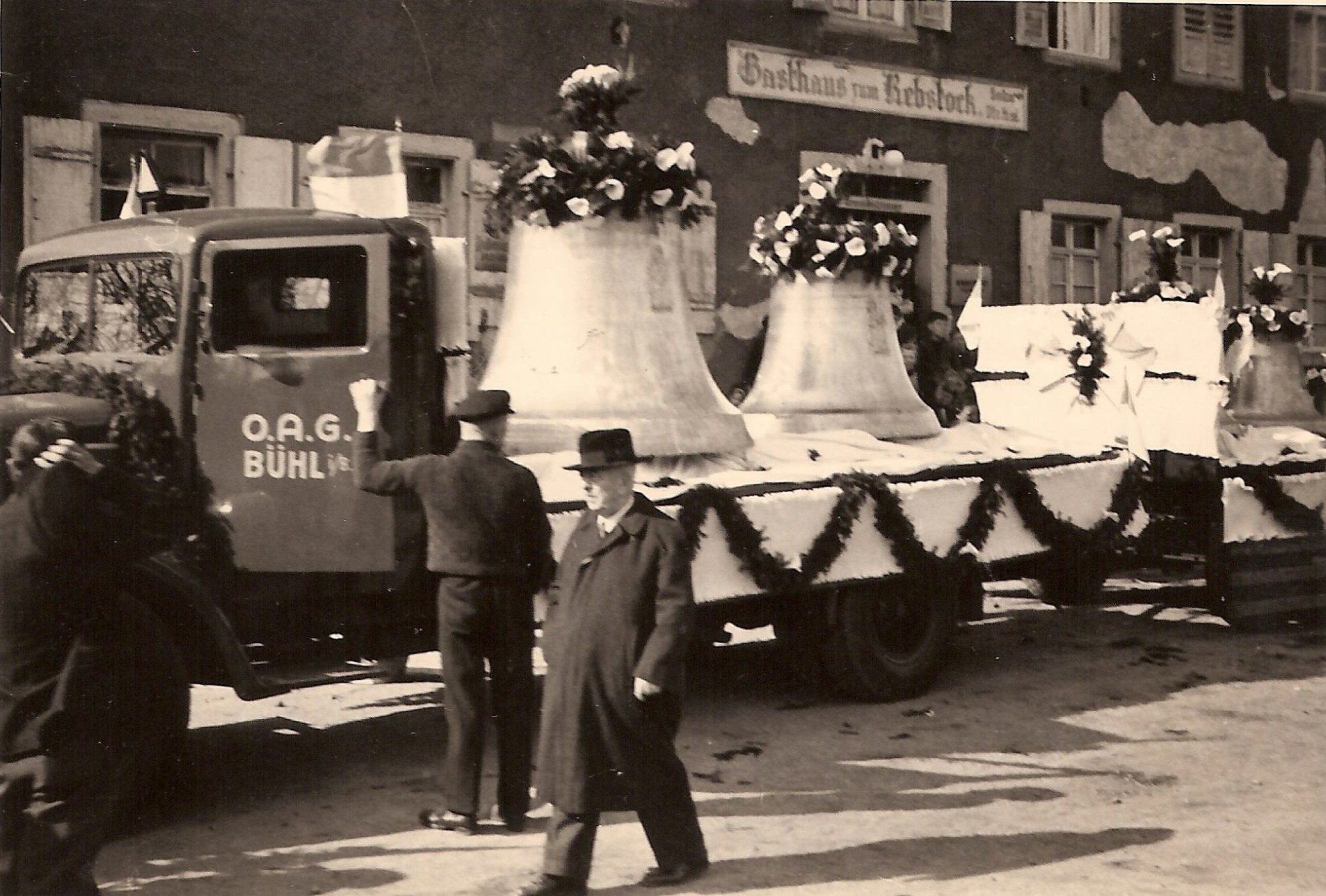
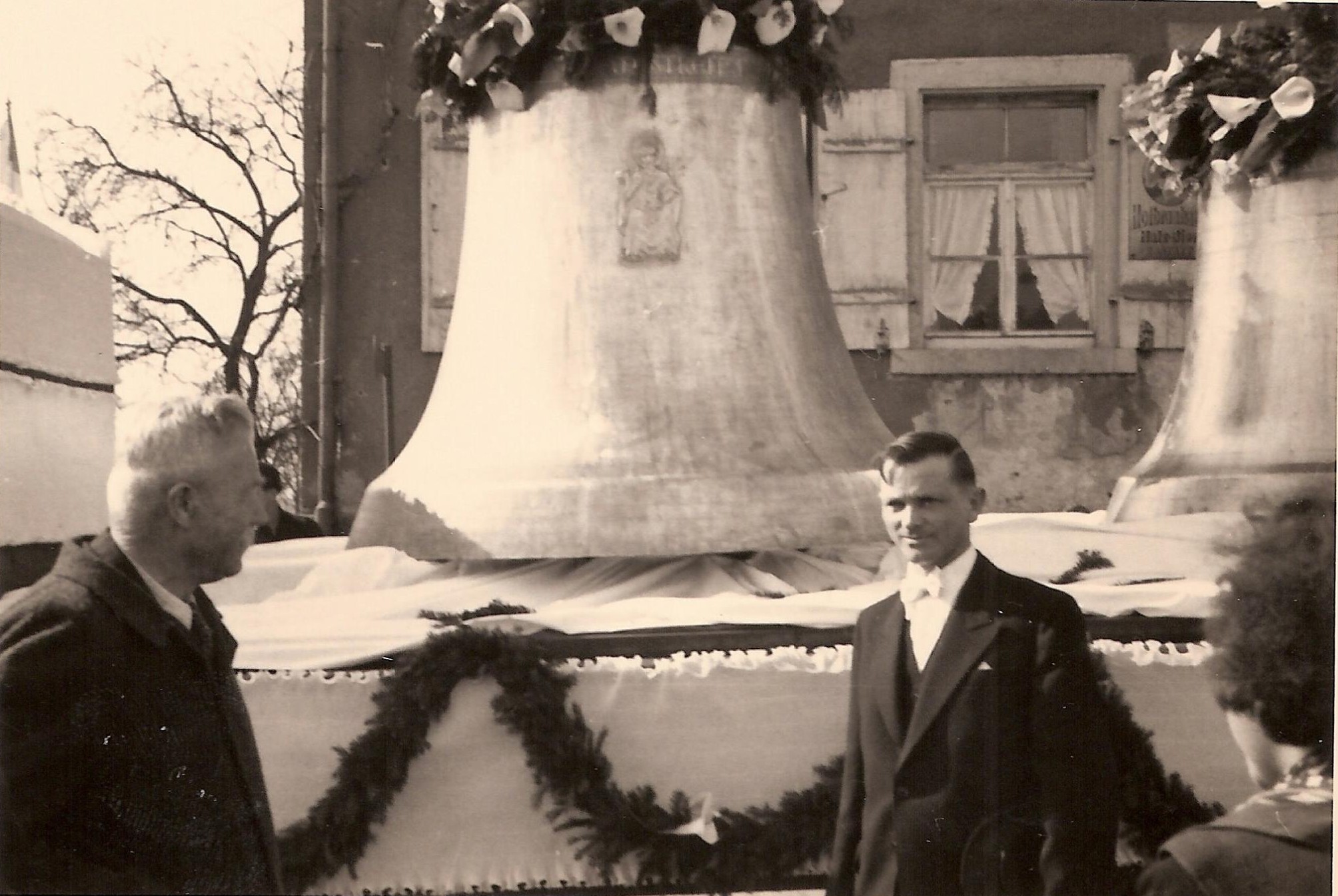
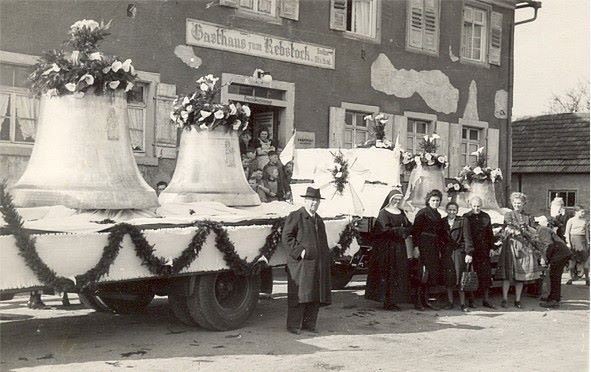
Ankunft der Glocken vor dem Rebstock in Müllenbach. Die Obstabsatzgenossenschaft (OAG) stellte ihr Fahrzeug zur Verfügung. Fotos: Stadtgeschichtliches Institut Bühl
15 Cloches

Des milliers de cloches d’église furent fondues durant les deux guerres mondiales pour récupérer le métal nécessaire à la fabrication d’obus. Pendant la Première Guerre mondiale, 67 500 cloches furent entreposées dans des cimetières de cloches, dont celles de l’église d’Eisental. En 1926, quatre nouvelles cloches furent installées à l’église Saint-Matthieu. « Le nouveau carillon présente la disposition harmonique et mélodique contractuellement stipulée: fa la♭ si♭ do. Je trouve le son pur, frais, puissant et ample, agréablement chaleureux et doux », écrivit l’inspecteur des cloches Steinhart dans son rapport. Quatorze ans plus tard, ces cloches furent à leur tour fondues.
En 1948, les habitants d’Eisental financèrent à nouveau de nouvelles cloches, qui arrivèrent au Gasthaus Rebstock depuis la fonderie de cloches Brilon et furent transportées en procession à travers le village.
15 Bells

Thousands of church bells were melted down during the two World Wars to obtain metal for the production of shell casings. During the First World War, 67,500 bells were stored in bell cemeteries, including the church bells of Eisental. In 1926, four new bells were installed for St. Matthew’s Church. “The new peal has the contractually stipulated harmonic-melodic disposition of F A♭ B♭ C. I find the sound pure, fresh, strong, and full, pleasantly warm and mellow,” wrote bell inspector Steinhart in his report. Fourteen years later, these bells were also melted down.
In 1948, the residents of Eisental once again financed new bells—those that arrived from the Brilon bell foundry at the Gasthaus Rebstock and were transypoprted through the village in a procession.