

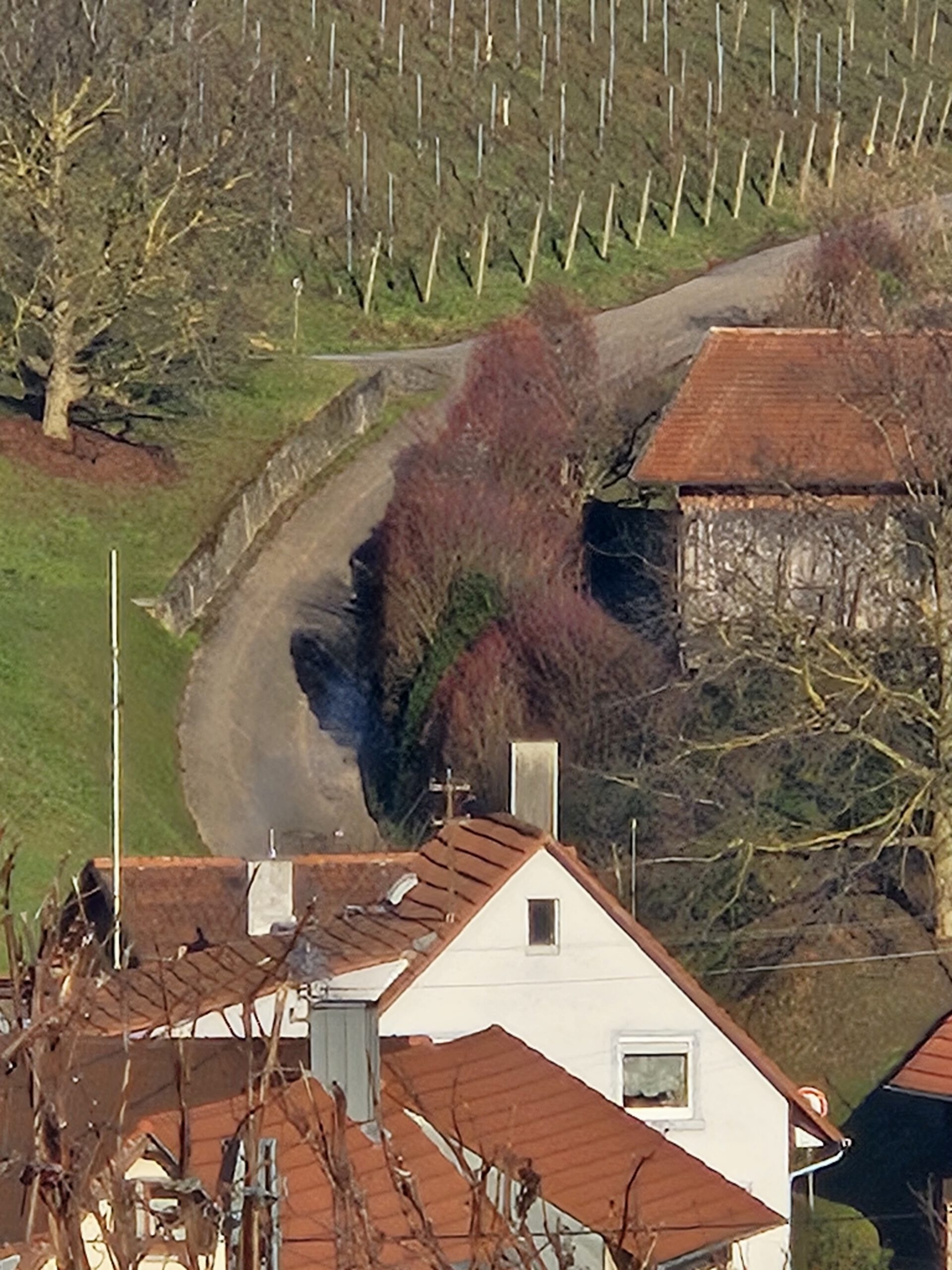
Vor der Rebflurbereinigung war die Trappsgasse ein Hohlweg, dreimal so lang wie heute, und die beste Schlittenbahn in Müllenbach.
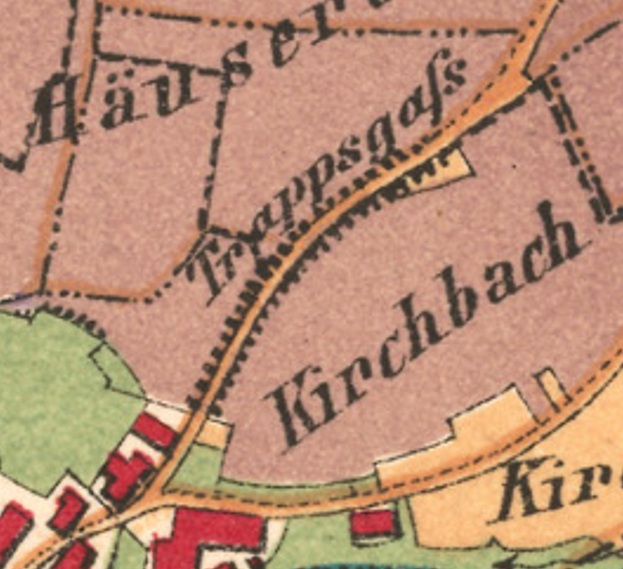
Quelle: Generallandesarchiv H1N.421
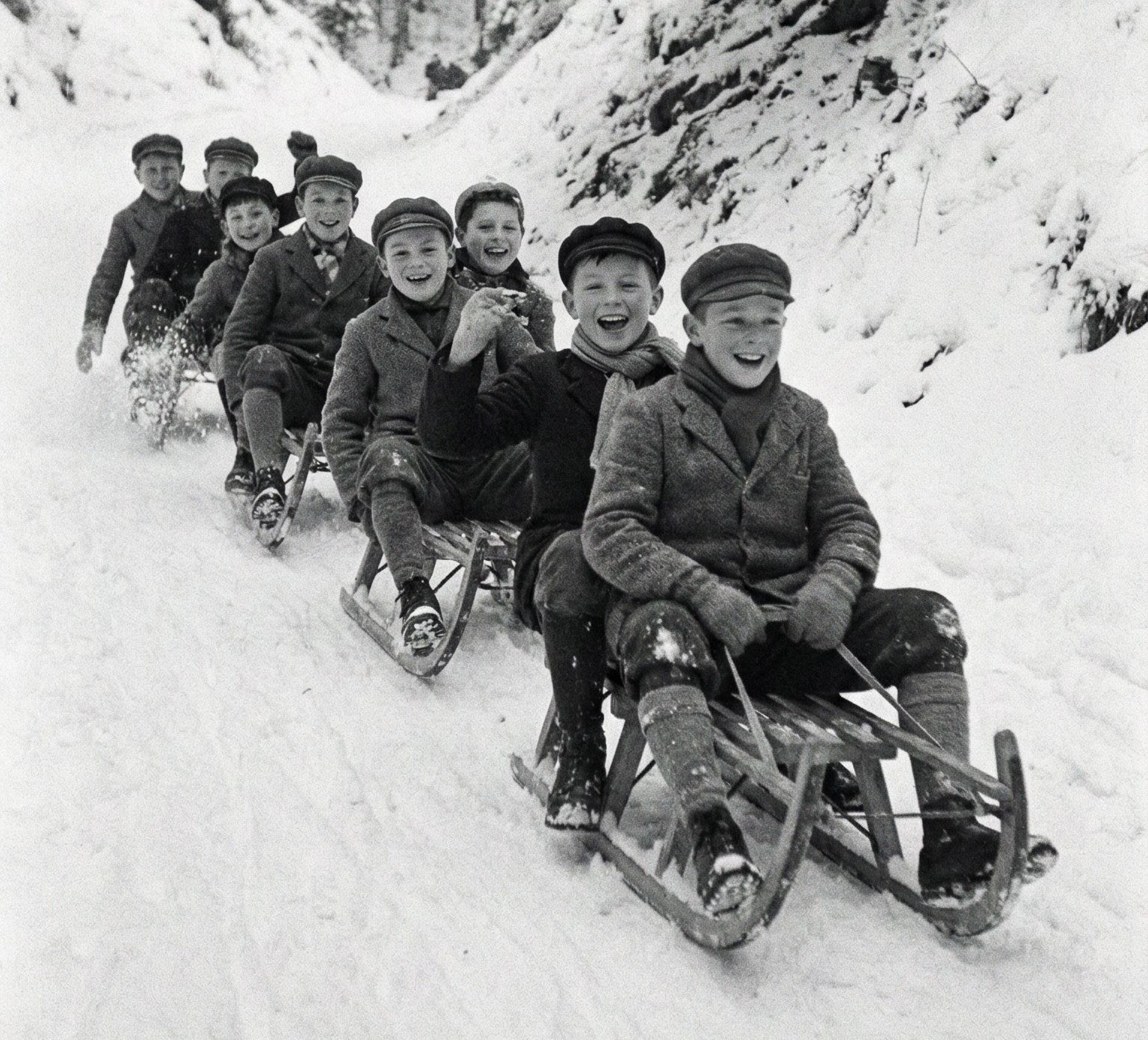
Nachts kamen die Buben mit der Gießkanne und machten den Schnee nass, damit er zu Eis gefror.
Trapps könnte auf den Namen eines Anwohners hinweisen oder auf das schwedische Wort Trappa, was Treppe bedeutet, also in dem Fall treppenförmige Landschaft. Im Namenlexikon steht unter Trapp: der in der Nähe einer Treppe, eines Anstiegs wohnt.
18 Trappsgasse

Avant le remembrement des vignobles, Trappsgasse était un chemin creux, trois fois plus long qu’aujourd’hui, et la meilleure piste de luge de Müllenbach. Le soir, les garçons venaient avec des arrosoirs et mouillaient la neige pour qu’elle gèle. Trapps peut désigner un habitant ou le mot suédois « trappa », qui signifie escalier, faisant ainsi référence à un paysage en escalier. Le dictionnaire toponymique définit « Trapp » comme : une personne qui vit près d’un escalier ou d’une pente.
18 Trappsgasse

Before the vineyard consolidation, Trappsgasse was a sunken lane, three times as long as it is today, and the best sledding run in Müllenbach. At night, the boys would come with watering cans and wet the snow so it would freeze. Trapps could refer to the name of a resident or to the Swedish word “trappa,” meaning stairs, thus referring to a terraced landscape. The dictionary of names defines “Trapp” as: someone who lives near stairs or a slope.